
Structured Lender Outreach Process for Borrowers
A structured lender outreach process for borrowers: lender readiness, segmentation, controlled distribution, feedback loops and term-sheet management.

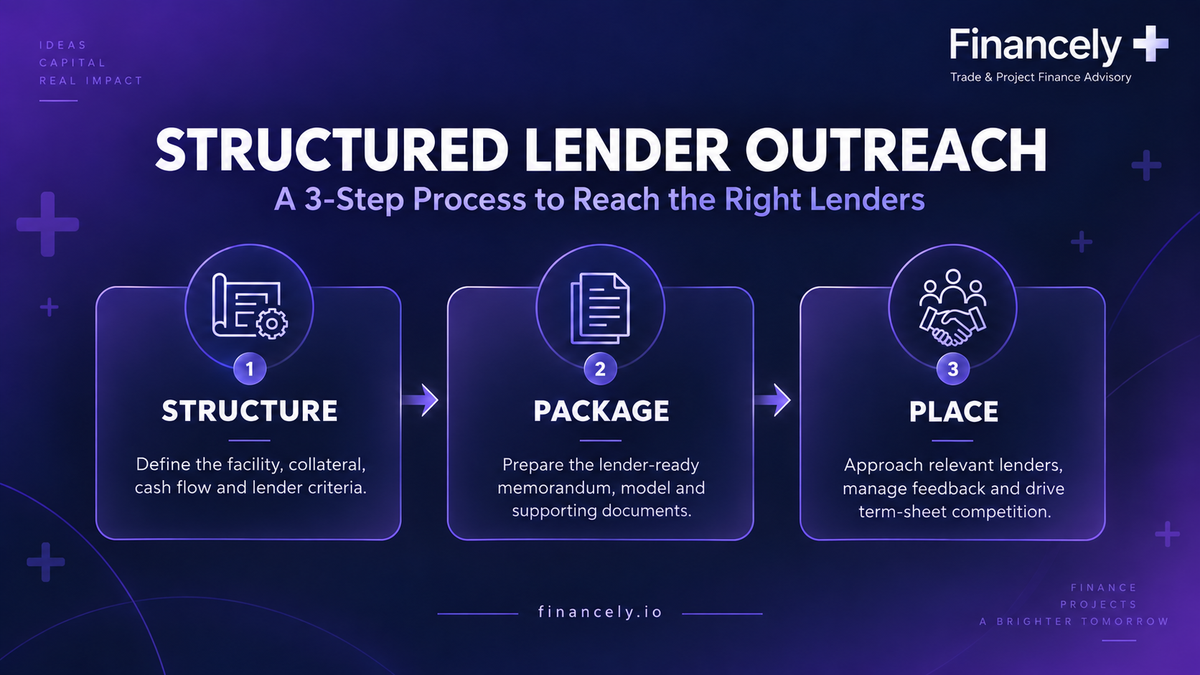
A structured lender outreach process gives the borrower control over who receives the transaction, what information is distributed, when lenders are contacted and how feedback is converted into an executable financing path. It replaces informal introductions with a defined transaction workflow.
The process should begin after the financing request has been sized and structured. Outreach is not a substitute for underwriting preparation. If the borrower has not resolved its debt requirement, repayment case, collateral position or data-room gaps, distribution will usually expose those problems rather than solve them.
For adjacent execution guidance, review structured lender outreach service, structured debt advisory definition, and start a structured debt engagement.
Step 1: Lender Readiness
Confirm the borrowing entity, requested amount, use of proceeds, proposed facility, repayment source, tenor, security, existing debt, sponsor contribution and target timetable. Financial statements and transaction documents should reconcile to the lender narrative.
At this stage, the adviser should also identify the obvious reasons a lender could decline the file. Those risks may be acceptable, but they should not be discovered only after distribution has started.
Step 2: Lender Segmentation
The lender universe should be divided by mandate. Useful fields include lender type, product, minimum and maximum ticket, geography, sector, collateral, leverage tolerance, required cash flow, regulatory constraints and known execution preferences.
A qualified lender list is therefore a credit-filtering output. The purpose is not to maximize the number of names. It is to identify institutions that can realistically underwrite the specific structure.
Step 3: Controlled Distribution
Outreach should use a consistent lender package and a clear distribution record. Confidential information can be staged, with an initial summary followed by NDA-controlled diligence where appropriate.
- Batch 1 Closest-fit lenders used to test structure and marketability.
- Batch 2 Additional qualified lenders after early feedback is incorporated.
- Final Focused follow-up with institutions showing a credible path to terms.
Step 4: Feedback and Re-Underwriting
Lender responses should be classified rather than treated as generic interest. A request for more information is different from an indicative credit appetite. A written decline with a specific structural objection can be more useful than an informal expression of interest.
If the same objection appears repeatedly, the borrower may need to adjust leverage, tenor, amortization, collateral, equity contribution or another transaction feature before further outreach.
Step 5: Term-Sheet Management
Once proposals emerge, the process moves from marketing to comparison and negotiation. Pricing should be assessed together with fees, leverage, amortization, covenants, reporting, security, conditions precedent and closing requirements.
Financely can manage this workflow as part of a paid structured debt mandate. Clients ready to begin can use the engagement intake to submit the transaction file.
FAQ About Structured Lender Outreach Process for Borrowers
Should borrowers contact every lender at once?
Usually not. Sequenced outreach preserves information control and allows early lender feedback to improve the file before the next group is approached.
What is a lender outreach tracker?
A controlled record of institutions contacted, dates, materials sent, status, questions, feedback, next actions and decision outcomes.
How long does lender outreach take?
Timing varies by transaction. For routine lender-ready mandates, an initial structured outreach and term-sheet process can often be organized around an indicative 45-day execution window, subject to lender and client responsiveness.
Move From Lender Readiness to Execution
Financely can manage the borrower workstream from lender readiness and segmentation through controlled distribution, lender feedback and proposal comparison.
Start the Outreach Process