
Structured Lender Outreach for Trade Finance
Structured lender outreach for trade finance across letters of credit, receivables, inventory, pre-export finance and borrowing-base facilities.

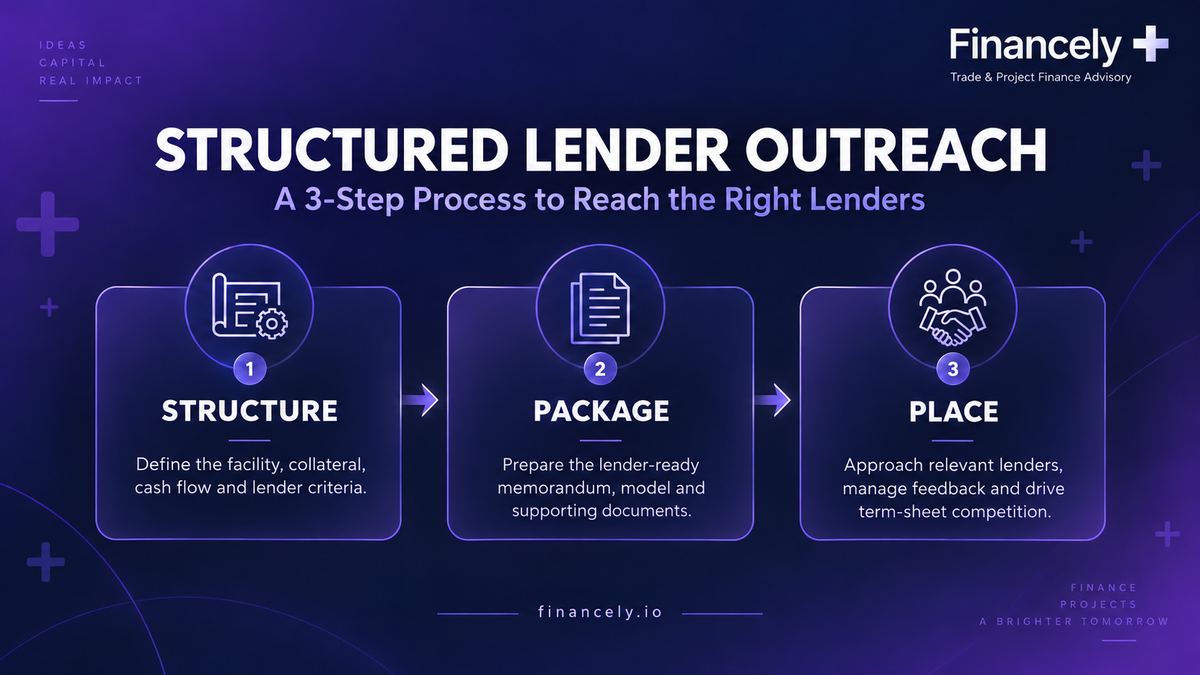
Structured lender outreach for trade finance starts with the underlying trade cycle, not with a generic request for working capital. Banks and specialty trade-finance lenders underwrite identifiable flows of goods, documents, counterparties, receivables, inventory and repayment. The outreach strategy therefore has to reflect the transaction mechanics before institutions are contacted.
A credible lender file should show who buys, who sells, what moves, when title transfers, how payment is triggered, where goods are controlled and which cash flow repays the facility. That analysis determines whether the relevant lender universe is better suited to documentary credit, receivables finance, inventory finance, pre-export finance, borrowing-base lending or another structured trade product.
For adjacent execution guidance, review structured lender outreach service, structured debt advisory framework, and request a trade-finance quote.
Build the Trade Flow Before the Lender List
Trade-finance lenders need a transaction map that reconciles the commercial contract with the requested facility. The package should identify the applicant, beneficiary, supplier, buyer, logistics chain, payment terms, Incoterms where relevant, inspection arrangements, insurance, storage, account flows and the legal entity that will borrow.
Where letters of credit are involved, documentary mechanics matter. The ICC's documentary credit guidance explains the principal parties and the role of UCP 600 in modern documentary credits. Outreach should not begin with vague requests for an LC or SBLC that are disconnected from the underlying commercial obligation.
Segment Lenders by Product and Control Structure
A bank willing to issue or confirm a documentary credit may not provide commodity inventory finance. A receivables financier may focus on investment-grade obligors but avoid emerging-market inventory risk. A commodity lender may require warehouse control, borrowing-base reporting, hedging and collateral-management arrangements.
- Documentary Credit Issuance, confirmation, discounting, UPAS structures and reimbursement capacity.
- Working Capital Receivables, supplier finance, inventory and borrowing-base facilities.
- Commodity Finance Pre-export, transactional finance, controlled inventory and structured repayment.
That difference is why structured lender outreach should classify institutions by the exact risk they are expected to assume rather than by a broad label such as trade finance.
Documents That Should Be Ready
For recurring trade flows, lenders commonly need historical trading evidence, financial statements, management accounts, aged receivables or payable data, purchase and sales contracts, counterparty information, logistics evidence and a cash-conversion analysis. Commodity transactions can require additional detail on storage, inspection, title, insurance, price risk, hedging and collateral management.
Newly established importers or trading vehicles generally require more support around sponsor strength, equity contribution, counterparties and control of proceeds. A strong end-buyer or supplier does not automatically solve borrower credit risk.
Run Outreach Around the Repayment Source
Each lender communication should make the repayment source explicit. For a receivables facility, that may be collections from approved obligors into a controlled account. For pre-export finance, it may be assigned export proceeds. For inventory finance, it may be the conversion of eligible stock into receivables and cash under borrowing-base controls.
Outreach should be adjusted when lender feedback identifies a structural problem. Examples include weak title control, excessive tenor, unhedged commodity exposure, unacceptable country risk or a mismatch between the requested facility and the borrower's actual trade cycle.
Financely Trade Finance Outreach
Financely can structure the trade-finance request, prepare the lender case, map relevant banks and non-bank lenders, coordinate distribution and manage the term-sheet process. Work is undertaken under a paid engagement and remains subject to lender underwriting, KYC, AML, sanctions screening and definitive documentation.
Qualified clients can begin through the Request a Quote process and provide the underlying contracts, requested facility, amount, tenor and transaction documents.
FAQ About Structured Lender Outreach for Trade Finance
Can you send an LC or SBLC request to banks before the trade is documented?
That is usually inefficient. The commercial obligation, parties, amount, tenor and repayment logic should be clear before formal bank outreach.
Do trade-finance lenders only look at collateral?
No. They also underwrite the borrower, counterparties, transaction documents, goods flow, legal enforceability, operational controls and repayment source.
Can the lender list include banks and non-bank lenders?
Yes. The appropriate mix depends on the product, geography, ticket size, collateral and whether the requirement is documentary, receivables-based, inventory-backed or cash-flow supported.
Take the Trade Finance Requirement to Market
Financely can structure qualified trade-finance mandates around the underlying trade cycle and approach banks or specialty lenders whose mandate fits the requested facility.
Start Trade Finance Outreach